Composite Mandate for CSL
1. About Skill Education under CBSE
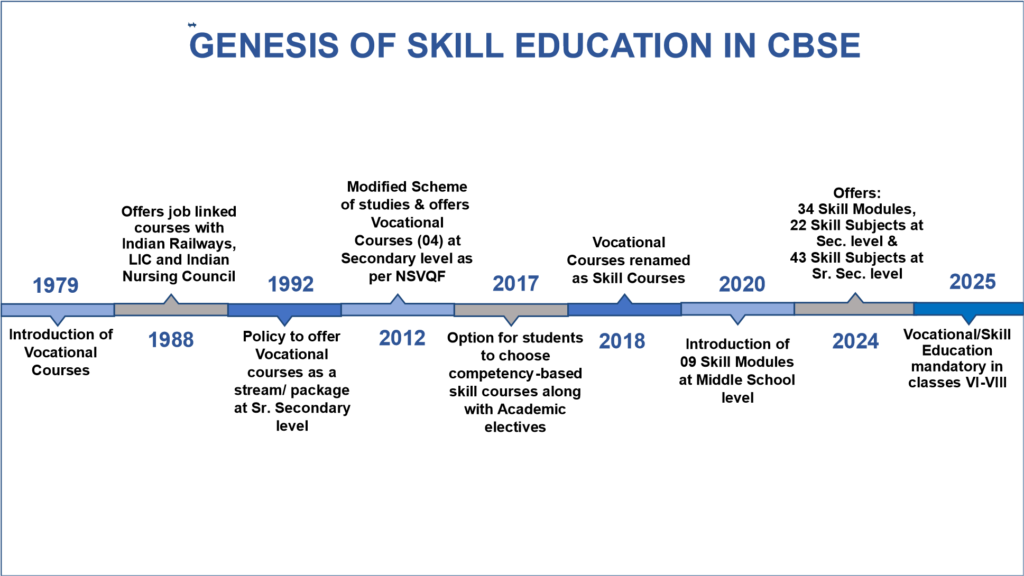
CBSE introduced Skill Education in 1970’s, laying the foundation for integrating practical, career-oriented learning into school education. Since then, it has evolved significantly to meet the changing needs of students, schools and the workforce, reflecting India’s growing emphasis on skill-based education. Today, CBSE offers skill education to students as an examinable subject from classes IX-XII.
In alignment with the National
Education Policy (NEP) 2020, which recommends the introduction of skill
education from class VI, CBSE launched skill modules from classes VI onwards in
2020 and further issued guidelines for mandatory implementation of Skill
education in class VI-VIII aligning with NCF-SE 2023.
2. About CBSE Mandate for Composite Skill Labs in Schools
CBSE has mandated the setting up of Composite Skill Labs as per Circular No Skill75/2024 dated 23 Aug 2024. The Composite Skill Labs are to be set up in schools with proper equipment for the purpose of delivering multi-sector skill education across three forms of work from classes VI to X as mandated in the National Education Policy (NEP) 2020 and the National Curriculum Framework for School Education (NCF-SE) 2023. The circular further mandates that all schools seeking fresh affiliation with CBSE must have a Composite Skill Lab with all necessary equipment.
3. Vocational / Skill Education under National Education Policy 2020
National Education Policy 2020 (NEP 2020) has given immense focus to integrate vocational education with mainstream education and remove the boundaries between these streams of education.
3.1 Key provisions of National Education Policy are as follows:
- No hard separation between vocational and academic streams (Section 4.9, NEP 2020)
- Respect for diversity and respect for the local context (Principles of this Policy, NEP 2020)
- Learning should be holistic, integrated, enjoyable and engaging (Section 4, NEP 2020)
- Reduce curriculum content to enhance essential learning and critical thinking (Section 4.5, NEP 2020)
- Overcome the social status hierarchy associated with Vocational Education (Section 16.4, NEP 2020)
- By 2025, 50% school learners to get exposure to vocational education and be adept in at least 1 skill (Section 16.5, NEP 2020)
3.2 Key Elements of NCF-aligned skilling in schools:
Overview of Vocational Education as per NCF-SE:
School education should prepare
students not just to understand the world around them, but also to do
productive work. These capacities for work would enable students to be
productive members for their households as well as participate in the economy.
Thus, this NCF sees Vocational Education as an integral part of the
curriculum.
- Through the Curricular Area of Vocational Education, students would be exposed to and develop basic skills in three ‘forms of work’ – work with life forms, work with machines & materials, and work in human services.
- The school curriculum at the Preparatory and Middle Stages would endeavour to build relevant capacities in the three forms of work. It also becomes the foundation for developing capacities in vocations in primary, secondary, and tertiary sectors of the economy, this meaningfully contributing to the aim of economic participation.
- In the Secondary Stage of four years, the first two years would work towards consolidating these capacities to develop transferable skills that serve students well in any vocation. In the last two years of schooling in the Secondary Stage, students will be given opportunities to specialise in specific vocations of their choice.
- The content of Vocational Education should be locally relevant as far as possible and, at the same time, respond to the aspirations of students. In the Secondary Stage, Learning Standards should align with National Skills and Qualifications Framework (NSQF) levels.
- The content must instil respect for the dignity of labour.
- Pedagogy should balance ‘making and thinking’ in a manner that is relevant for vocations. Workshops and projects are effective ways of teaching vocational capacities. Internships and apprenticeships are encouraged while taking safety considerations into account.
- Assessments should be based on observations, portfolios, and projects and should not just focus on capacities and skills but also values and disposition.
3.3 The National Curriculum Framework for School Education (NCF-SE) 2023 details delivery of multi-sector skill education across three forms of work in schools. NCF-SE 2023 emphasizes that vocations chosen must be across the three forms of work:
“This NCF uses ‘forms of work’ as a guiding concept for designing the curriculum. Productive work at its most fundamental level can be divided into three categories (Section 9.1.3, NCF-SE 2023)
i. Work with Life Forms
ii. Work with Machines & Materials, and
iii. Work on providing Human Services”
3.4 The key elements of vocational/skill education in each stage as per NCF-SE 2023:
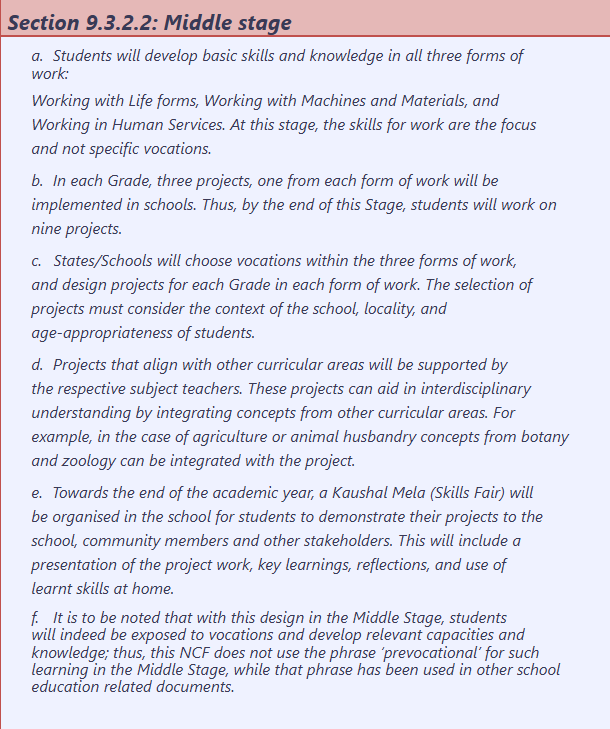
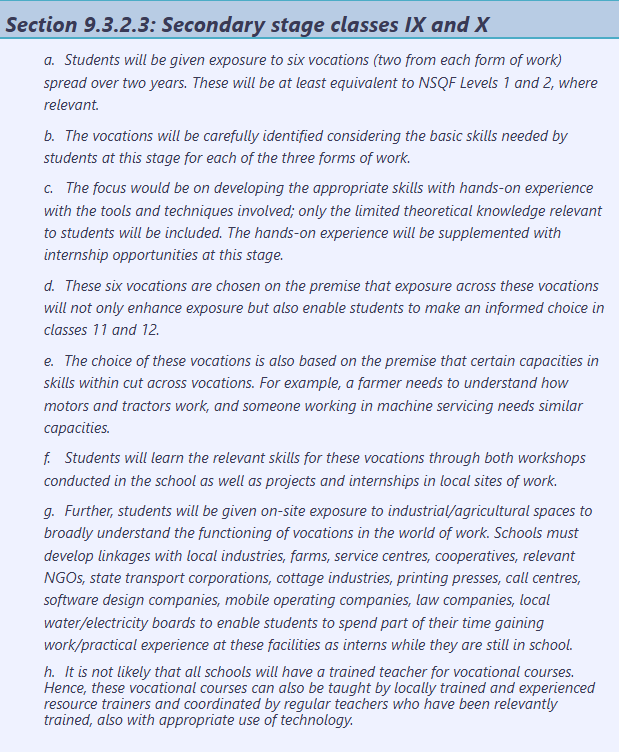
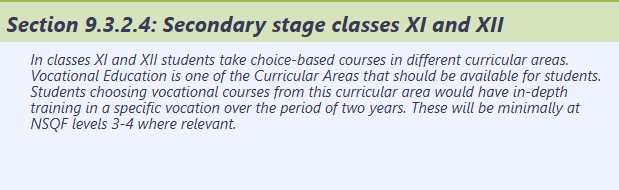
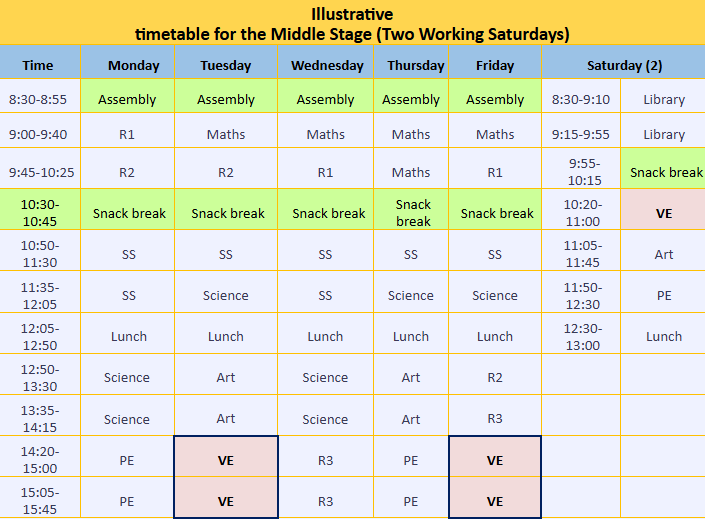
3.5 Further, the NCF-SE has allocated time within the school timetable for the integration of vocational education:
Section 4.4.2: Suggestive Time Allocation/ Timetable provided in NCF-SE 2023 for Middle Stage (Classes VI-VIII) (with two working Saturdays)
Suggested time table provided in NCF-SE advocates that skill/ vocational education periods may be combined to have a continuous longer period required for hands-on activities.
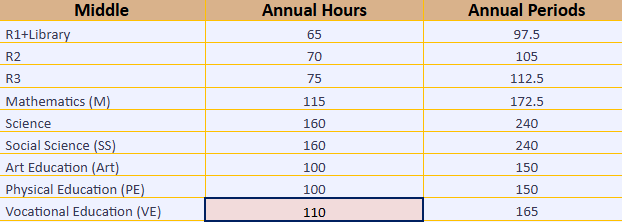
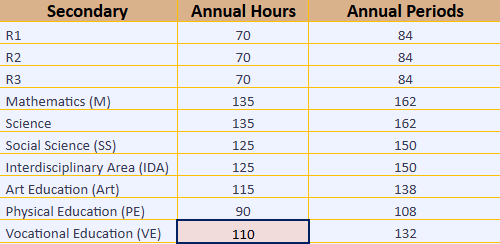
Annual Hours and Annual Periods
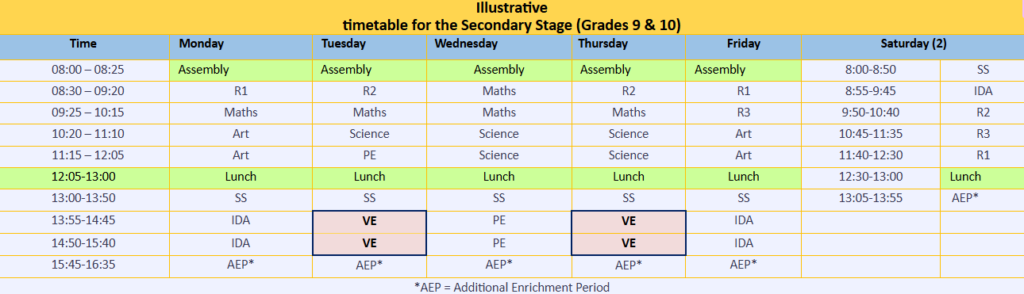
Section 4.4.3: Suggestive Time Allocation/ Timetable provided in NCF-SE 2023 for Secondary Stage (Classes IX and X)